Buying a Winter Home in Scottsdale & Fountain Hills: 2026 Snowbird Guide
Buying a winter home in Scottsdale or Fountain Hills is one of the most specific real estate transactions you can make, it requires different criteria, different community research, and a different approach than buying a primary residence. This guide covers what to look for, what to avoid, and how to find the property that works when you are there and when you are not.
Key Takeaways
- Peak Season Reality: October through April is peak season in Scottsdale and Fountain Hills. This is the critical window to visit before buying, as the weather, traffic, and community dynamics change completely during the summer off-season.
- True Lock-and-Leave Infrastructure: A true lock-and-leave property features restricted access, comprehensive HOA exterior maintenance, and flexible rental rules. Always audit the HOA’s financial reserve study before making an offer to avoid unexpected special assessments.
- Favorable Property Tax Structure: Arizona second homes do not carry higher base assessment ratios than primary residences. However, they do not qualify for the State New Homeowner Rebate, bringing the annual property tax on a $700,000 property to roughly $3,570.
In This Article
- Why Buy a Winter Home in Scottsdale or Fountain Hills?
- What Makes a True Lock-and-Leave Property?
- Scottsdale vs. Fountain Hills: Which Is Better for Snowbird Buyers?
- What Does an Arizona Winter Home Cost to Own?
- How Do You Finance a Second Home in Arizona?
- Can You Rent Your Arizona Winter Home When You Are Away?
- What Are the Residency and Tax Implications of Owning an Arizona Winter Home?
- What Is the Best Time of Year to Buy a Snowbird Home in Arizona?
- What Are the Pros and Cons of a Scottsdale Winter Home?
- Frequently Asked Questions
Why Buy a Winter Home in Scottsdale or Fountain Hills?
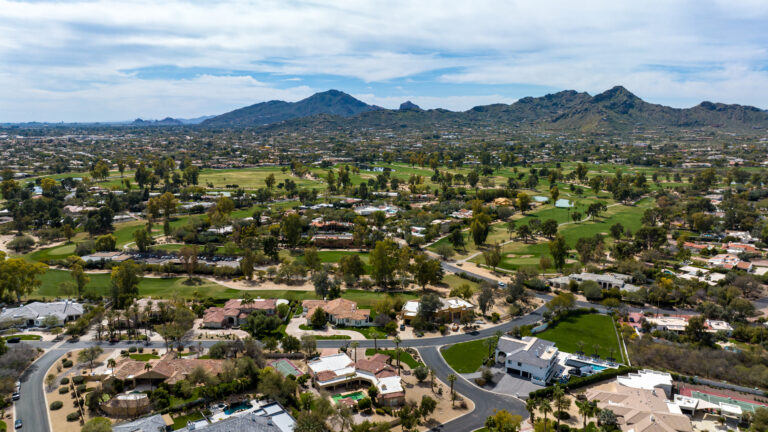
Scottsdale and Fountain Hills are the premium tier of the Arizona snowbird market because they offer genuine year-round lock-and-leave infrastructure, strong short-term rental demand when you are away, and a buyer pool deep enough to support resale values. For buyers seeking a winter retreat that doubles as a financial asset, both markets offer options that few other Sun Belt destinations match.
The Phoenix Valley has been a snowbird destination for decades, but Scottsdale and Fountain Hills have emerged as the premium tier of that market. Several factors make them specifically compelling for buyers looking for a winter retreat rather than a full-time residence.
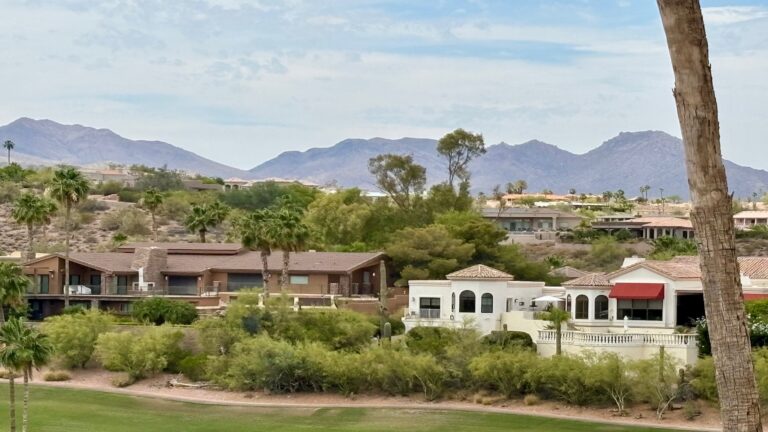
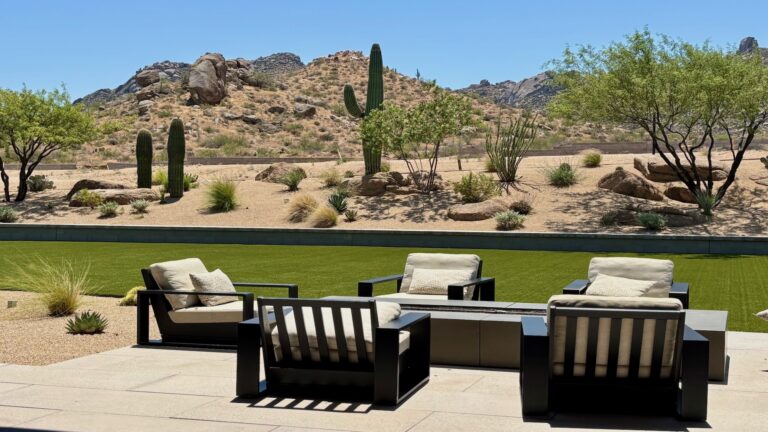
The weather window is exceptional. October through April in Scottsdale and Fountain Hills delivers consistent 65°F to 80°F days with low humidity and abundant sunshine. Golf, hiking, tennis, and outdoor dining are daily activities, not occasional ones. The nine-month quality-of-life window is what drives the entire snowbird market.
The community infrastructure is built for seasonal residents. Unlike emerging markets, Scottsdale and Fountain Hills have decades of investment in the amenities, social programming, and community organizations that work for part-time residents. You are not arriving to an empty community, you are arriving to a full season calendar of events, activities, and social opportunities.
The proximity to Phoenix Sky Harbor is a practical advantage. Direct flights to most Midwest and Northeast cities run year-round from Phoenix Sky Harbor, typically 3 to 4 hours to Chicago, Detroit, or Minneapolis. The airport is 20 to 35 minutes from most North Scottsdale and Fountain Hills addresses.
The property tax is genuinely low. Arizona’s second-home property tax rate is approximately 1.0% to 1.1% of assessed value (slightly higher than primary residence rate). On a $700,000 Fountain Hills winter home, annual property taxes run approximately $3,570 to $3,850. On a comparable Florida or coastal property, the same purchase generates meaningfully higher annual tax bills.
For the full Arizona relocation overview, see the Arizona Relocation Guide. For the full snowbird buyer hub, see the Buying a Winter Home Guide.
What Makes a True Lock-and-Leave Property?
A true lock-and-leave property combines secured access, comprehensive exterior maintenance, and robust asset protection to allow extended absences without oversight anxiety.
- Secured Access: Opt for communities featuring staffed guard gates, key-fob electronic entries, or integrated video intercom systems to mitigate property risks during seasonal vacancies.
- HOA Exterior Maintenance: Verify that the homeowner association covers roof repair, exterior painting, common area landscaping, and structural upkeep. Review the community’s Covenants, Conditions, and Restrictions (CC&Rs) to confirm the exact boundary of your maintenance obligations.
- On-Site Management or Home Watch Services: Many premium condominium and townhome developments feature on-site personnel to coordinate maintenance, manage packages, and conduct physical property checks.
- Permissive Governing Policies: Confirm the community’s rental rules early. Some associations ban short-term rentals, others require minimum 30-day stays, and some allow weekly operations.
Finding a true lock-and-leave property requires knowing which communities actually deliver on that promise. Book a complimentary winter home strategy session with Aleksandra, a licensed Scottsdale Realtor who specializes in helping snowbird buyers find the right community for their lifestyle and budget.
Scottsdale vs. Fountain Hills: Which Is Better for Snowbird Buyers?
Choosing between Scottsdale and Fountain Hills depends entirely on whether your priority is walkable urban luxury or private, scenic desert tranquility.
| Metric | Scottsdale | Fountain Hills |
|---|---|---|
| Best Suited For | High-end dining, shopping, and nightlife | Quiet mountain views and natural privacy |
| Amenity Access | High density, highly walkable districts | Localized, boutique dining and shopping |
| Natural Setting | Developed valley floors and golf courses | Elevated McDowell Mountain topography, Dark Sky community |
| Inventory Type | Abundant luxury condos and mid-rise villas | Primarily single-family homes and mountain-view townhomes |
| Price Per Square Foot | Premium market pricing | Approximately 20% lower than comparable Scottsdale acreage |
| Transit to Airport | 20–25 minutes to Phoenix Sky Harbor | 40–50 minutes to Phoenix Sky Harbor |
The snowbird sweet spot in Scottsdale: Guard-gated condo and villa communities in North Scottsdale, Grayhawk and DC Ranch, McCormick Ranch, and DC Ranch Village, offer the strongest lock-and-leave infrastructure with resort-grade amenity access.
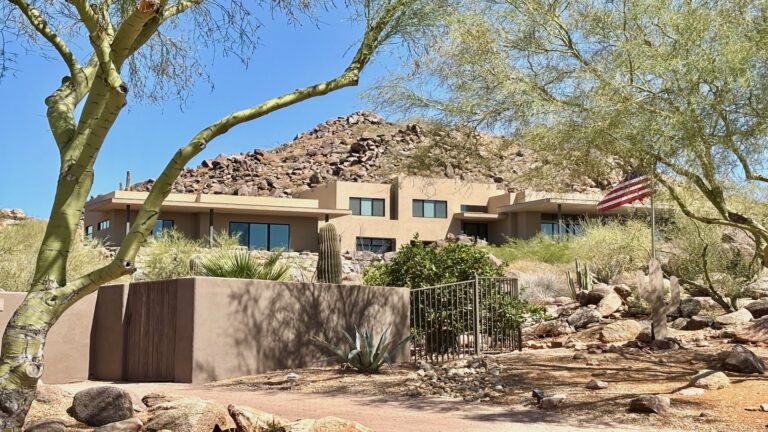
The snowbird sweet spot in Fountain Hills: Properties in Adero Canyon and FireRock Country Club offer mountain view estates with guard-gated security, HOA exterior maintenance, and the quiet sanctuary experience that many snowbirds specifically seek. See the full Fountain Hills guide →
For a detailed side-by-side of both markets, see the complete Scottsdale vs Fountain Hills buyer comparison.
🌵 Local Tip
Before you make an offer, ask your Realtor to pull the HOA’s financial reserve study. An underfunded reserve fund is one of the most common sources of surprise special assessments for snowbird buyers. A community with strong reserves protects your carrying cost predictability for years after closing.
What Does an Arizona Winter Home Cost to Own?
The total carrying cost of an Arizona winter home ranges from $10,000 to over $22,000 annually beyond basic mortgage payments, heavily influenced by local HOA fees and seasonal cooling requirements.
Based on ARMLS Q1 2026 market data, here is an accurate cross-market carrying cost projection:
Estimated Annual Carrying Costs: Fountain Hills vs. North Scottsdale
| Expense Category | $700,000 Fountain Hills Condo/Villa | $900,000 North Scottsdale Condo |
|---|---|---|
| Property Taxes (Est. LPV) | $3,570 | $4,590 |
| HOA Fees (Annualized) | $3,600 – $6,000 | $6,000 – $9,600 |
| Homeowners Insurance | $1,800 – $3,000 | $2,400 – $4,000 |
| Electricity (Off-season AC maintenance) | $600 – $1,200 | $800 – $1,500 |
| Property Management / Home Watch | $1,200 – $2,400 | $1,500 – $3,000 |
| Total Annual Carrying Cost | $10,770 – $16,170 | $15,290 – $22,690 |
Local Tax Tip: In Arizona, primary and secondary residential properties share the exact same assessment ratio: 10% of the Limited Property Value (LPV). Second homes cost slightly more annually simply because they do not qualify for the State New Homeowner Rebate (the local school tax subsidy), which saves primary residents up to $600 per year.
For California buyers considering a full relocation rather than a seasonal retreat, see the California to Scottsdale Relocation guide.
How Do You Finance a Second Home in Arizona?
Financing a second home generally requires a larger down payment and stronger cash reserves than a primary residence, and your loan terms hinge on whether the lender classifies the property as a second home or an investment property.
Second home vs. investment property. This is the distinction that drives everything else. A property you use seasonally and rent out little or not at all is typically classified as a second home, which usually carries more favorable terms than an investment-property loan. If you intend to rent it substantially while you’re away, the lender may classify it as an investment property, generally meaning a higher down payment and a different rate. Because the classification also affects how the property is treated for taxes, confirm how your intended use maps to both your loan and your tax situation with your lender and a CPA before you apply.
Down payment and reserves. Second-home mortgages commonly start around 10% down and can run to 25% or more depending on the lender, your credit profile, and the loan program. Lenders also frequently want to see several months of payments in cash reserves, since you’ll be carrying two properties at once.
Qualifying while carrying two homes. Your debt-to-income calculation has to absorb both housing payments. If you still carry a mortgage on your primary residence, build that into your budget conversation with your lender early, since it affects how much you’ll qualify for.
Cash vs. financing. Many snowbird buyers pay cash, often drawing on home equity or retirement assets. Cash simplifies a compressed, out-of-state purchase and strengthens your offer, but it ties up capital. Whether cash or financing makes more sense depends on your liquidity, the rate environment, and your tax picture — a question for your financial advisor and CPA rather than a one-size answer.
Get pre-approved with an Arizona lender before you shop. A pre-approval from a lender licensed in Arizona lets you act the same day you find the right property, which matters on a remote purchase where well-priced homes move quickly.
Loan terms, rates, and qualification standards vary by lender and shift with market conditions. This is general information, not a lending commitment or financial advice. Consult a licensed mortgage professional and a CPA for guidance specific to your circumstances.
Can You Rent Your Arizona Winter Home When You Are Away?
You can rent out your Arizona winter home when you are away, provided the community’s specific Homeowners Association (HOA) rules explicitly permit it. Here’s what to consider:
The HOA is the gating factor, not the law. Arizona state law generally permits short-term rentals. But most HOA CC&Rs either prohibit them entirely, set minimum stay requirements (typically 30 days), or require HOA approval for each rental. The HOA’s rules govern, and they vary dramatically from community to community.
The tax implications: Renting your Arizona property for 15 or more days per year triggers specific IRS reporting requirements. Arizona also requires a Transaction Privilege Tax (TPT) license for any rental activity. Consult a CPA before your first rental transaction.
If rental income is important to your ownership math: Select a community with permissive rental policies before buying, not after. Communities that explicitly permit rentals with a 7-day minimum often command higher purchase prices precisely because of this flexibility. Your Realtor can identify rental-friendly communities in your target market.
A realistic rental income expectation: A $700,000 Fountain Hills home renting for the summer months (May through September) at $3,500 to $4,500 per month for a 4-month occupancy generates approximately $14,000 to $18,000 in gross rental income. After management fees, HOA compliance costs, and vacancy, net income is typically $8,000 to $12,000, meaningful but not a significant offset to carrying costs at this price point.
For retirees considering full-time Arizona residency, see the Retiring in Scottsdale and Fountain Hills guide.
What Are the Residency and Tax Implications of Owning an Arizona Winter Home?
Owning a winter home in Arizona does not by itself make you an Arizona resident. Income-tax residency turns on where you are domiciled and how much time you spend in the state, not on property ownership.
Owning property is not the same as residency. You can own an Arizona home and remain a resident of your home state. Arizona bases income-tax residency on domicile (your permanent home and the place you intend to return to) rather than on holding a deed here.
The nine-month presumption. Under Arizona law (A.R.S. § 43-104), an individual who spends more than nine months of the tax year in Arizona is presumed to be a resident, though that presumption can be rebutted with evidence the stay was temporary. A typical snowbird season, roughly October through April, falls under that threshold. But this rule is one input, not a safe harbor, and your home state applies its own residency rules at the same time, some more aggressively than others.
Keeping your primary residency clear. Steps tax professionals commonly cite for snowbirds who want to keep residency in their home state include maintaining a permanent home and primary documentation, such as driver’s license, voter registration, and primary banking, in that state, and keeping a record of days spent in each state. These are general examples, not instructions for your situation.
Second-home property tax. Arizona assesses non-primary residences at a modestly higher rate than primary homes. See the carrying-cost section above for the illustrative figures rather than treating them as a quote for your specific property.
Rental income changes the picture. If you rent the home while you’re away, Arizona rental tax and licensing come into play. The rental section above covers the TPT license and reporting basics; coordinate those with a CPA.
Residency and domicile are fact-specific legal and tax questions governed by both Arizona rules and your home state’s rules. This is general educational information, not legal or tax advice. Confirm your situation with a CPA or a tax attorney experienced in multi-state residency before relying on any day-count threshold.
What Is the Best Time of Year to Buy a Snowbird Home in Arizona?
The ideal strategic approach is to conduct lifestyle research between October and April, then execute your actual purchase transaction between May and September.
The best time to visit: October through April. This is when the community is at its best, full social calendar, perfect weather, and the true picture of what lock-and-leave life looks like. Do not buy based on a summer visit when the community is at its quietest.
The best time to buy (strategically): May through September. Counterintuitively, the summer off-season creates buying opportunities. Inventory is higher, buyer competition is lower, and sellers who need to transact are more negotiable. A buyer willing to purchase in June or July when most snowbirds have returned north can often negotiate meaningfully better terms.
The balance: Visit during season (October through April) to confirm lifestyle fit. Execute the purchase during off-season (May through September) to maximize negotiating position. This two-step approach is how experienced snowbird buyers get the best of both.
For the full offer process for out-of-state buyers, see how to make an offer on a Scottsdale home →
What Are the Pros and Cons of a Scottsdale Winter Home?
A winter home is a lifestyle purchase and a financial commitment. Understanding both sides clearly produces better decisions and better outcomes.
Pros of a Winter Home in Scottsdale
- The rental income opportunity is real and strong. Scottsdale and Fountain Hills command premium short-term rental rates, particularly during February through April when demand from events, golf tournaments, and Spring Training peaks. A well-positioned property can generate $4,000 to $8,000 per month during peak season.
- The lock-and-leave infrastructure exists. Gated communities, HOA managed exterior maintenance, and professional property management services in both markets make extended absences operationally manageable in ways that many other markets do not.
- The climate window is exceptional. October through May delivers some of the finest outdoor weather in North America, warm, dry, sunny days with cool evenings. For buyers escaping northern winters, the contrast is dramatic and consistent.
- The resale market is deep. Both Scottsdale and Fountain Hills have established secondary buyer pools for winter homes, meaning your exit, when it comes, is not dependent on finding a rare specialized buyer.
Trade-Offs of a Winter Home in Scottsdale
- The true carrying cost is higher than the mortgage. HOA fees, property management, insurance, utilities, and seasonal maintenance add $10,000 to $22,000 per year to the cost of a Scottsdale winter home. Model the full carrying cost, not just the mortgage, before you set your budget.
- Short-term rental income is not guaranteed. Rental income projections depend on location, property quality, and platform management. The market can shift. Do not build your financial plan around rental income you have not yet verified with a local property manager.
- Arizona income tax applies to rental income. If you rent your Arizona property while you are away, that rental income is taxable in Arizona. Consult a CPA familiar with Arizona rental tax rules before you begin renting.
- Summer visits are possible but sparse. Some snowbird buyers visit in summer, but the property will sit largely unused from June through September. Factor this into how you think about carrying costs relative to actual use.
Buying a Winter Home in Scottsdale and Fountain Hills: Common Questions
For most snowbird buyers, condos and villas in HOA communities offer better lock-and-leave functionality, the HOA handles exterior maintenance, and many buildings have on-site management. Single-family homes offer more space and privacy but require more self-management or a dedicated property manager during extended absences. The right answer depends on your maintenance tolerance and privacy preferences.
HOA fees vary enormously by community and amenity level. Guard-gated condo communities in North Scottsdale typically run $400 to $800 per month, often covering water, trash, exterior maintenance, and amenity access. Standalone villa communities typically run $200 to $500 per month. Always verify exactly what the HOA covers before relying on it for your lock-and-leave plan.
Only if the HOA CC&Rs permit it. Many Scottsdale and Fountain Hills communities restrict short-term rentals or set minimum stay requirements of 30 days. Verify the specific rental policy before making an offer, this is one of the most important due diligence items for snowbird buyers who plan to generate rental income.
Arizona second homes (non-primary residences) are assessed at a slightly higher rate than primary residences, approximately 1.0% to 1.1% of assessed value versus 0.51% for primary. On a $700,000 property, annual taxes run approximately $3,570 to $3,850. Significantly lower than comparable markets in Florida, the Midwest, or the Northeast.
Scottsdale is better for snowbirds who want walkable dining, high-density events, and abundant lock-and-leave condo inventory. Fountain Hills is better for those seeking a quieter sanctuary with mountain views, a tight-knit community, and more home per dollar. Many snowbird buyers visit both before deciding, and often find the answer is immediately obvious once they experience each community’s daily rhythm.
Visit during season (October through April) to confirm lifestyle fit. Execute the purchase during off-season (May through September) when buyer competition is lowest and negotiating room is greatest. This two-step approach maximizes both lifestyle clarity and purchase value.
Buying a Scottsdale or Fountain Hills winter home is a specific transaction that rewards local expertise. Schedule a strategy session with Aleksandra to identify the right communities, verify the HOA details, and time your purchase for maximum negotiating advantage.
AZBound is an educational resource written by a licensed Arizona Realtor. This content does not constitute legal, financial, or tax advice. Property tax estimates based on Maricopa County 2026 assessment rates. HOA fee ranges based on current Scottsdale and Fountain Hills market data. Consult a licensed Arizona Realtor and CPA before purchasing a second home. Aleksandra Kadzielawski, Licensed Arizona Realtor, Lic #SA694336000, eXp Realty. Member of WeSERV.