What It’s Really Like Living in Fountain Hills: An Insider’s Honest Guide
At a Glance
- Fountain Hills is genuinely different from Scottsdale, and that is the point. With a population of approximately 25,000 and a median age of 59, it operates more like a small town than a Phoenix suburb.
- The fountain is real and it matters. Fountain Hills Park features a massive fountain that rockets water more than 560 feet into the air, surrounding a 100-million-gallon lake that serves as the social center of the town.
- The honest trade-off is isolation versus serenity. Fountain Hills requires a car for virtually everything beyond the immediate downtown. That is a feature for some and a dealbreaker for others.
Most guides about Fountain Hills describe what it has. This one describes what it is actually like to live there, including the daily rhythms, the community culture, the driving reality, the summers, and the things nobody tells you before you move. It is written from the perspective of a licensed Arizona Realtor who has helped buyers navigate both Scottsdale and Fountain Hills for years.
In This Article:
- What Daily Life in Fountain Hills Actually Looks Like
- The Community Culture: What Makes Fountain Hills Different
- The Driving Reality: What You Need to Know Before You Move
- Summers in Fountain Hills: The Honest Version
- What Fountain Hills Does Better Than Scottsdale
- What Fountain Hills Does Not Have
- Who Thrives in Fountain Hills and Who Does Not
- Living in Fountain Hills Arizona: Common Questions
What Daily Life in Fountain Hills Actually Looks Like
The downtown core along Fountain Hills Boulevard is genuinely walkable for a desert town. Within a few blocks you have local restaurants, coffee shops, a farmers market on Saturday mornings, the Fountain Hills Theater, boutique shops, and the park with the fountain.
For everything else such as major grocery shopping beyond the local Bashas, Safeway, Target, and soon to come Sprouts Market, specialty retail, major medical appointments, a night at a concert venue, you are driving to Scottsdale. That drive is 20 to 30 minutes along Shea Boulevard, which is scenic and rarely congested outside of peak hours.
Most Fountain Hills residents make peace with this arrangement quickly. Many describe it as exactly what they wanted: close enough to the city to access it when desired, far enough away to escape it daily.
The weekly rhythm for most Fountain Hills residents:
- Morning walks on the McDowell Sonoran Preserve trails or around the lake
- Coffee and breakfast downtown or at a local café
- 1 to 2 trips per week to Scottsdale for groceries, errands, or dining
- Monthly or occasional trips to Phoenix for major events or specialty care
- Evening social life centered around local restaurants, the theater, and neighbor gatherings
The Community Culture: What Makes Fountain Hills Different
Fountain Hills hosts a variety of local events, such as the Fountain Festival of Fine Arts and Crafts and the St. Patrick’s Day celebration, which bring residents together. The Fountain Hills Theater offers live performances year-round. These are not afterthoughts but the social calendar around which the town organizes itself.
The population skews older and wealthier than most Phoenix suburbs. The median age is 59 which is one of the highest in the Phoenix Valley. More than 73% of the population is classified as married. This demographic reality shapes the social culture: it is not a young family suburb or an urban social scene. It is a community of settled, accomplished people who chose a quieter life deliberately.
California buyers who move to Scottsdale and then discover Fountain Hills often describe it as what they were really looking for all along. The key is knowing which lifestyle you are actually optimizing for before you buy.
The Driving Reality: What You Need to Know Before You Move
Fountain Hills sits at the end of Shea Boulevard, beyond the natural barrier of the McDowell Mountains. There is no freeway access within the town. The closest on-ramp is at Shea and Pima Road which is approximately 15 minutes from most parts of Fountain Hills.
What this means in practice:
- Getting to Phoenix Sky Harbor: 45 to 55 minutes under normal conditions
- Getting to North Scottsdale for everyday errands: 20 to 30 minutes
- Getting to the Mayo Clinic or HonorHealth Scottsdale campuses: 25 to 35 minutes
- Getting to the I-10 or I-17 for trips west or south: 45 to 60 minutes
Valley Metro’s bus route connecting Fountain Hills to Phoenix was discontinued in April 2025. For retirees who do not commute daily, this driving reality is entirely manageable. For remote workers with occasional office visits or frequent travel, it requires honest assessment.
Summers in Fountain Hills: The Honest Version
Summer months bring daily highs of 100°F to 110°F from June through September. Outdoor activity moves to early morning before 8am and after sunset. Local restaurants and community events continue as air-conditioned Arizona is entirely functional in summer.
Fountain Hills sits at approximately 1,520 feet elevation which is slightly higher than central Scottsdale and Phoenix. This can mean marginally cooler temperatures and occasional monsoon storms with dramatic views over the Valley below. The July and August monsoon season brings the most striking sunsets of the year.
Most long-term Fountain Hills residents adapt quickly. They shift their outdoor activity schedule, invest in quality air conditioning, and often travel during the peak heat months. The lifestyle interruption is real but manageable for people who knew what they were choosing.
What Fountain Hills Does Better Than Scottsdale
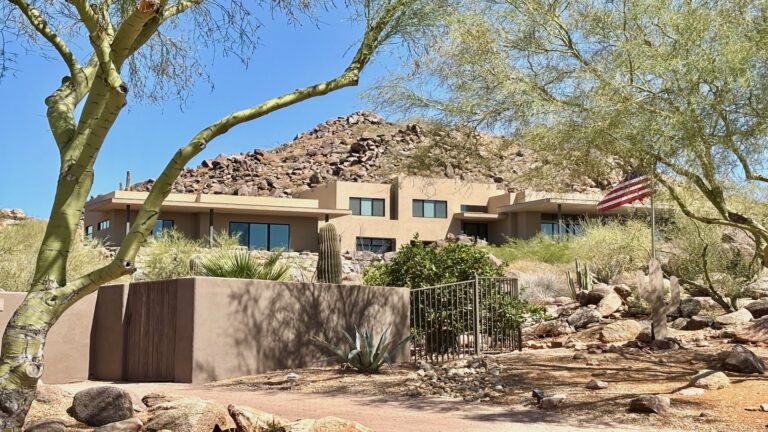
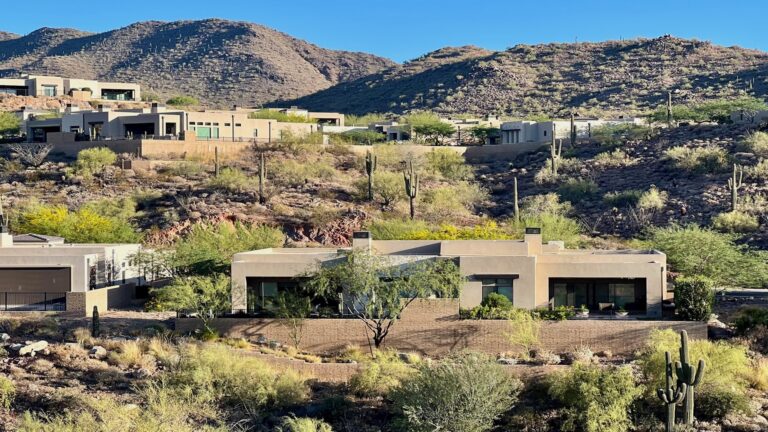
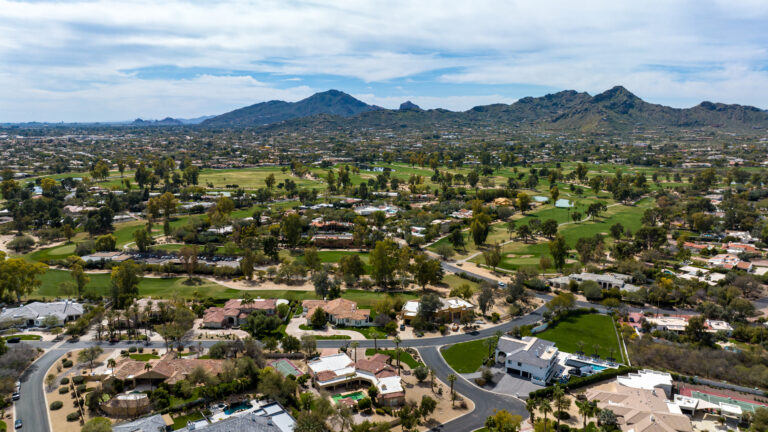
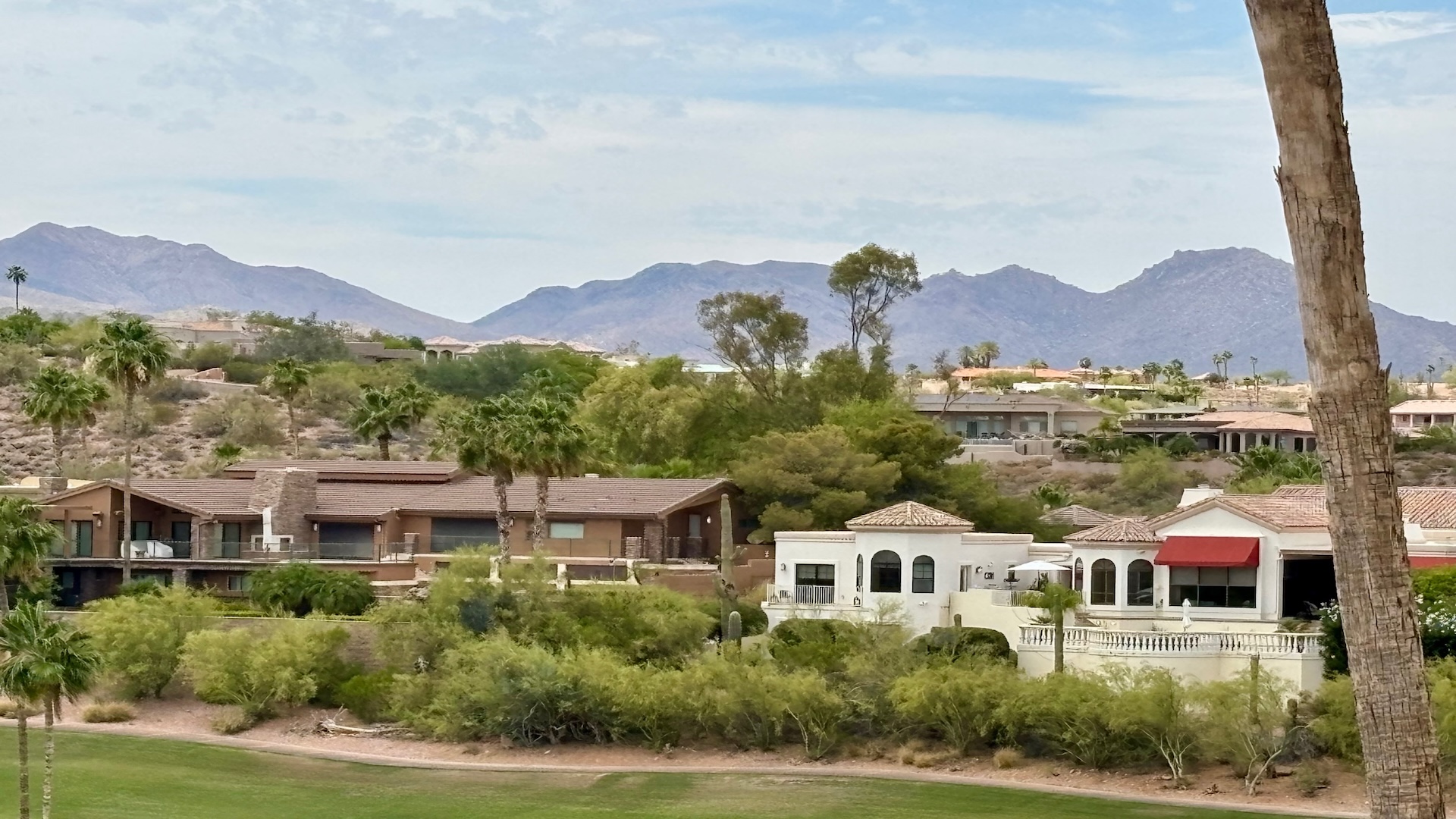
Natural setting and views: One of only two Dark Sky urban communities in America, Fountain Hills delivers night sky access and McDowell Mountain views that are genuinely extraordinary. Properties in the hills above town command some of the most dramatic desert panoramas in the Phoenix area.
Community intimacy: In Scottsdale’s 260,000-person city, anonymity is easy. In Fountain Hills, you see the same people at the market, the park, and the theater. The community organizations are active and welcoming. For retirees coming from large anonymous cities, this intimacy is often exactly what they were looking for.
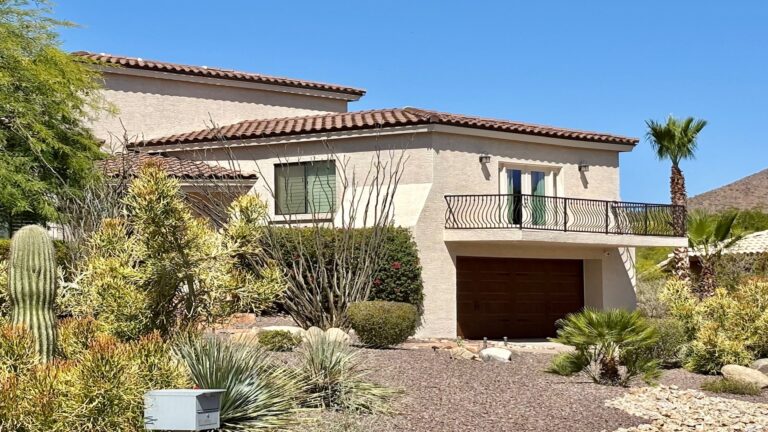
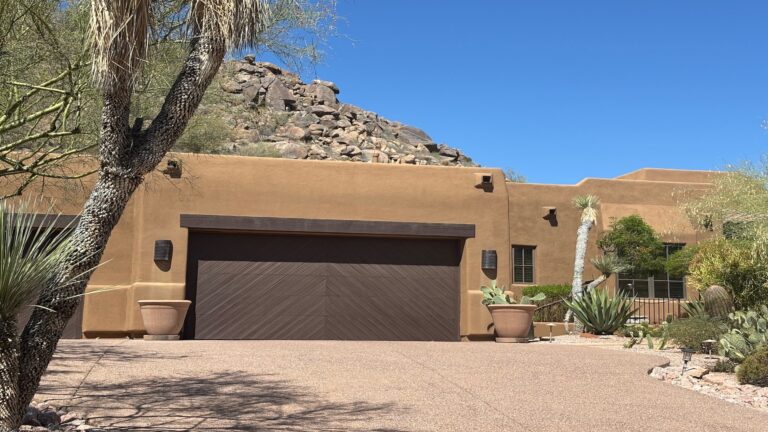
Value per square foot: At the same budget, Fountain Hills often delivers more interior space, larger lots, and premium finishes than comparable Scottsdale communities. For buyers who prioritize their home and property over proximity to urban amenities, the value equation often favors Fountain Hills.
What Fountain Hills Does Not Have
A freeway: There is no interstate or Loop access within Fountain Hills. This is structural since the McDowell Mountains create a natural barrier that limits future road development.
A major hospital: Routine medical care is available locally, but anything requiring a hospital stay or specialist goes to Scottsdale. This is the single most significant infrastructure gap for aging residents or those with complex health needs.
A movie theater or major entertainment venue: Fountain Hills has excellent local restaurants and the theater, but the nightlife infrastructure of Old Town Scottsdale does not exist here. That is not a drawback for most of the people who choose Fountain Hills, but precisely why they chose it.
Who Thrives in Fountain Hills and Who Does Not
People who thrive in Fountain Hills:
- Retirees who want a genuine community and are finished commuting
- Remote workers who value natural setting and quiet over urban access
- Couples who want a slower pace without full rural isolation
- Nature enthusiasts (and dog lovers!) who will use the McDowell Sonoran Preserve trails regularly
- People who have lived in a big city for decades and want the opposite
People who struggle in Fountain Hills:
- Anyone who needs a hospital or specialty medical center within 15 minutes
- People who underestimate the driving commitment
- Anyone expecting Scottsdale-level dining, nightlife, or entertainment density
The clearest signal: If you visit Fountain Hills on a Saturday morning (coffee downtown, walk around the lake, watch the fountain) and feel immediately at peace, you will likely thrive there. If you spend that Saturday feeling like you need more, Scottsdale is probably the better fit.
If Fountain Hills sounds like the lifestyle you have been looking for, the next step is a conversation about what your specific budget unlocks in this market. Request a free Fountain Hills Relocation Strategy Session →
Deciding between Scottsdale and Fountain Hills is part of a larger move — see the Moving from California to Scottsdale guide and our California to Arizona relocation hub.
Living in Fountain Hills Arizona: Common Questions
Yes, for the right kind of retiree. Fountain Hills offers a genuine small-town community, exceptional natural scenery, and a pace of life that many retirees specifically seek out. The trade-offs are healthcare proximity and driving dependence. Retirees who visit and feel immediately at home tend to stay for decades. For a direct comparison, see Scottsdale vs Fountain Hills retirement comparison →
Approximately 20 to 30 minutes from central Scottsdale along Shea Boulevard. The drive is scenic and passes through the McDowell Mountains corridor. Most Fountain Hills residents make this drive 1 to 3 times per week for shopping, dining, and healthcare.
Fountain Hills carries a moderate cost premium above the national average, primarily driven by housing costs. The Q1 2026 median home price was $722,500 per ARMLS, below Scottsdale’s most expensive areas but above many comparable Phoenix suburbs.
The Fountain Hills Unified School District serves the community with an elementary school, middle school, and high school with strong test scores and graduation rates. For families requiring broader school choice or private school options, Scottsdale’s larger district offers more alternatives.
The crime rate is far lower than the national average per 100,000 residents. Fountain Hills consistently ranks as one of the safer communities in the Phoenix metro area.
It depends entirely on what you value. Fountain Hills delivers more natural scenery, community intimacy, and value per square foot. Scottsdale delivers more healthcare access, dining variety, entertainment, and urban amenity proximity. Spending a long weekend in each is the most reliable way to answer this question for yourself. See the full Scottsdale vs Fountain Hills comparison →
Fountain Hills Park features a massive fountain that rockets water more than 560 feet into the air, surrounding a 100-million-gallon lake. The park around the lake is the social center of the community and one of the most genuinely beautiful public spaces in the Phoenix Valley. Check the Town of Fountain Hills website for current fountain schedule times.
Fountain Hills is a specific kind of place — and it is not for everyone. If it sounds like your kind of place, let’s talk about making it happen. Schedule a free session →
AZBound is an educational resource written by a licensed Arizona Realtor based in Scottsdale and Fountain Hills. This content does not constitute legal or financial advice. Home value data from ARMLS Q1 2026. Community data sourced from AreaVibes and Niche. Aleksandra Kadzielawski, Licensed Arizona Realtor, Lic #SA694336000, eXp Realty. Member of WeSERV.